
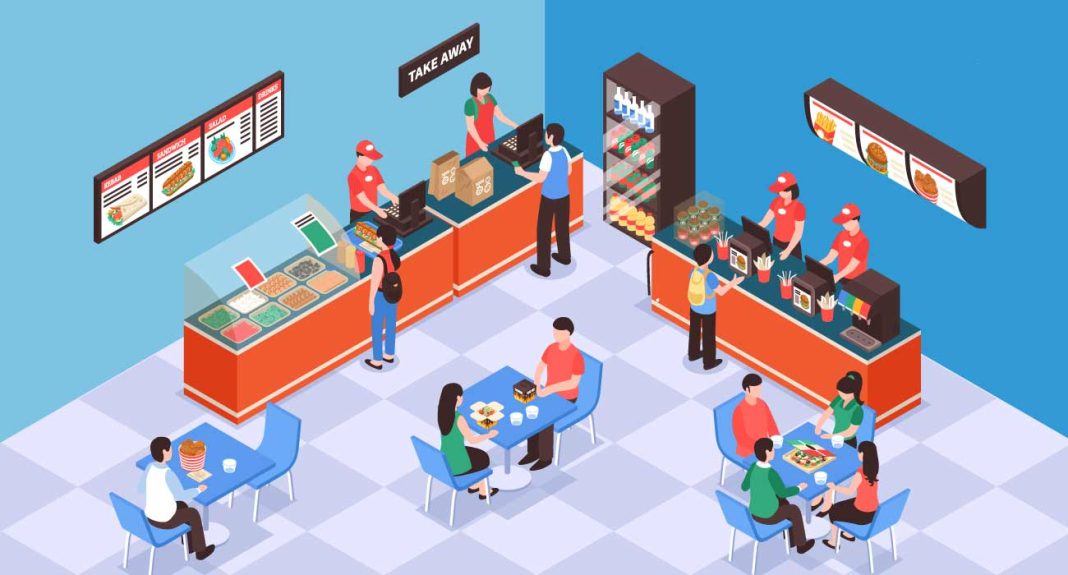
With cost-of-living pressures reshaping consumer decisions, customers are evaluating QSR loyalty programmes through a more practical lens, focusing on how they help them save. Consumers indicate a willingness to switch programmes in search of better rewards
For many quick-service restaurants today, loyalty programme participation is no longer about collecting points or unlocking tiers. It is increasingly defined by whether the programme delivers meaningful savings. As cost-of-living pressures reshape consumer decisions, diners are evaluating loyalty programmes through a more practical lens, focusing on tangible returns, ease of use, and how seamlessly they fit into everyday routines.
The 2026 Quick Service Restaurant Study from Alchemer, based on a survey of 800 US consumers, highlights this shift. While expectations are firmly centred on value, engagement continues to lag. A significant share of respondents report forgetting to use loyalty programmes, indicating that availability alone does not ensure participation.
Savings is The Primary Driver of Loyalty
The most defining signal from the research is clear. Loyalty is now shaped by financial value rather than brand affinity. A large majority of diners identify saving money as the most important benefit of a loyalty programme, with discounts and free items significantly outperforming convenience-led or early-access perks.
Motivation to Sign Up for QSR Loyalty Programs
- Discounts: 82%
- Free items: 77%
- Exclusive menu items: 41%
- Convenience: 41%
- Other: 1%
This shift reflects a bigger structural change. In a cost-conscious environment, loyalty programmes are no longer perceived as an extension of brand experience but as a practical tool for managing spend. Diners are less interested in recognition and more focused on immediate, usable value.
This mindset is also influencing behaviour across the lifecycle. A notable proportion of consumers indicate a willingness to switch programmes in search of better rewards, making loyalty more fluid and transactional. What attracts customers is often the same factor that drives them away when expectations are no longer met.
When Value Declines, Loyalty Weakens
If loyalty is anchored in savings, any perceived reduction in value has a disproportionate impact. Expiration policies illustrate this clearly. A considerable number of consumers cite expiring points as one of their biggest frustrations, placing it above issues such as app performance or system complexity.
While expiration may appear to be a minor programme rule, it directly affects perceived fairness. In an environment where consumers are closely monitoring value, the removal of earned rewards feels less like policy and more like a penalty.
This perception has clear consequences. When value is no longer transparent or reliable, engagement begins to decline. Combined with the growing willingness to switch programmes, these policies contribute directly to churn. Protecting earned value is no longer a secondary consideration; it is central to retention.
Effort is Becoming Part of the Value Equation
Mobile has become the primary interface for loyalty programmes, but the experience remains inconsistent. For many consumers, apps serve as the main entry point, yet they do not always deliver the ease expected.
The research points to a clear behavioural shift. Diners are now evaluating effort alongside savings. Rewards that require multiple steps or additional time to redeem begin to lose their perceived value. What should function as an incentive can quickly become a source of friction.
- 44% say they don’t use loyalty programs every time because they “don’t think about it”
- 61% say AI-powered suggestions are helpful, and 85% say they are more likely to join programs that tailor rewards to their purchase history
- 37% are unwilling to pay for a QSR loyalty subscription while only 28% currently do
Invisibility is Driving Disengagement
Not all disengagement stems from poor experience. In many cases, it is driven by a lack of visibility. A large proportion of consumers report simply forgetting to use loyalty programmes, making forgetfulness one of the most significant barriers to engagement.
The reasons vary. Some diners feel programmes require too much planning, while others avoid using them in certain purchase scenarios or consider them inconvenient. Regardless of the cause, the outcome remains consistent.
Over time, this creates a compounding effect. When rewards go unused, perceived value declines, engagement drops, and the programme gradually becomes irrelevant.
Personalisation is Expected, But Relevance is Critical
The study also highlights a nuanced shift in how consumers view personalisation. Most diners are open to AI-driven recommendations when they deliver clear value. A majority find these suggestions helpful and believe they can reflect genuine preferences.
However, expectations are becoming more precise. While personalised rewards increase the likelihood of programme participation, irrelevant offers remain a significant frustration.
This contrast defines the opportunity for brands. When executed effectively, it reduces effort and strengthens perceived value. When it misses the mark, it contributes to noise and disengagement.
Conclusion: Loyalty Must Be Proven Continuously
Loyalty is no longer built solely through engagement. It is sustained through outcomes. Every interaction, reward, and experience contributes to how value is perceived.
For QSR brands, this changes the focus. The priority is no longer simply increasing participation, but ensuring that loyalty programmes are easy to use, clearly valuable, and consistently relevant. In a cost-conscious environment, loyalty is not driven by intent. It is driven by what customers actually receive.









 Amplitude is a product analytics platform, enabling businesses to track visitors with the help of collaborative analytics. The platform leverages the capabilities of


 Zoho Social, a part of Zoho’s suite of 50+ products, is a comprehensive social media management platform for businesses and agencies. The Zoho Social dashboard includes a robust set of features, such as Publishing Calendar, Bulk Scheduler, and Approval Management to offer businesses all the essential social media publishing tools. Its monitoring tools help enterprises track and respond to relevant social conversations.

 Microsoft Dynamics 365 represents a robust cloud-based CRM solution with features such as pipeline assessment, relationship analytics, and conversational intelligence. It utilises AI-powered insights to provide actionable intelligence via predictive analytics, lead scoring, sentiment analysis, etc. Currently, Microsoft operates in 190 countries and is made up of more than 220,000 employees worldwide.
 HubSpot is an inbound marketing, sales, and customer service software provider, offering robust CRM and automation solutions. Some of its products include Marketing Hub, Sales Hub, Operations Hub, Content Hub, Commerce Hub, Marketing Analytics and Dashboard Software. Guided by its inbound methodology, HubSpot enables companies to prioritise innovation and customer success.
 Monday.com is a project management software company, offering a cloud-based platform that enables businesses
  Headquartered in San Mateo, California, Freshworks is a global AI-powered business software provider. Its tech stack includes a scalable and comprehensive suite for IT, customer support, sales, and marketing teams, ensuring value for immediate business impact. Its product portfolio includes Customer Service Suite, Freshdesk, Freshchat, Freshcaller, Freshsuccess, and Freshservice. Freshservice for Business Teams has helped several global organisations to enhance their operational efficiency.
 Talkdesk offers an innovative AI-powered customer-centric tech stack to its global partners. The company provides generative AI integrations, delivering industry-specific solutions to its customers. Talkdesk CX Cloud and Industry Experience Clouds utilise modern machine learning and language models to enhance contact centre efficiency and client satisfaction.



 The company offers comprehensive cloud-based solutions, such as Microsoft Dynamics 365, Gaming Consoles, Microsoft Advertising, Copilot, among other things, to help organisations offer enhanced CX and ROI. Its generative-AI-powered speech and voice recognition solutions,such as Cortana and Azure Speech Services empowers developers to build intelligent applications.
 IBM is a global hybrid cloud and AI-powered
  Uniphore is an enterprise-class, AI-native company that was incubated in 2008. Its enterprise-class multimodal AI and data platform unifies all elements of voice, video, text and data by leveraging Generative AI, Knowledge AI, Emotion AI and workflow automation. Some of its products include U-Self Serve, U-Assist, U-Capture, and U-Analyze. Its Q for Sale is a conversational intelligence software that guides revenue teams with AI-powered insights, offering clarity on how to effectively keep prospects engaged.
 Google Cloud accelerates every organisation’s ability to digitally transform its business. Its enterprise-grade solutions leverage modern technology to solve the most criticial business problems
  8×8 offers out-of-the-box contact centre solutions, assisting all-size businesses to efficiently meet customer needs and preferences. It offers custom CRM integrations support and integrates effortlessly with third-party CRMs like Salesforce, Microsoft Dynamics, Zendesk, and more. Offering global support in all time zones & development teams in 5 continents, its patented geo-routing solution ensures consistent voice quality.
 Sprinklr is a comprehensive enterprise software company for all customer-focused functions. With advanced AI, Sprinklr’s unified customer experience management (Unified-CXM) platform lets organisations offer human experiences to every customer, every time, across any modern channel.

 Upland offers a comprehensive suite of contact centre and customer service solutions with products including InGenius, Panviva, Rant & Rave, and RightAnswers. InGenius enables organisations to connect their existing phone system with CRM, further enhancing agent productivity. Panviva provides compliant and omnichannel capabilities for highly regulated industries. Whereas, Rant & Rave, and RightAnswers are its AI-powered solutions,


 Hootsuite, headquartered in Vancouver, is a social media management platform that streamlines the process of managing multiple social media accounts. Some of its core offerings include social media content planning and publishing, audience engagement tools, analytics and social advertising. Its easy-to-integrate capabilities help marketing teams to schedule and publish social media posts efficiently.
 Brandwatch enables businesses to build and scale the optimal strategy for their clients with intuitive, use-case-focused tools that are easy and quick to master. Bringing together consumer intelligence and social media management, the company helps its users react to the trends that matter, collaborate on data-driven content, shield the brand from threats and manage all the social media channels at scale.

 Adobe Experience Cloud offers a comprehensive set of applications, capabilities, and services specifically designed to address day-to-day requirement for personalised customer experiences at scale. Its platform helps play an essential role in managing different digital content or assets to improve customer happiness. Its easy-to-optimise content gives users appropriate marketing streams, ensuring product awareness.
 Salesforce-owned Tableau is an AI-powered analytics and business intelligence platform, offering the breadth and depth of capabilities that serve the requirements of global enterprises in a seamless, integrated experience. Marketers can utilise generative AI models, AI-powered predictions, natural language querying, and recommendationsons.
 Contentsquare is a cloud-based digital experience analytics platform, helping brands track billions of digital interactions, and turn those digital


 Zoho Corporation offers innovative and tailored software to help leaders grow their business. Zoho’s 55+ products aid sales and marketing, support and collaboration, finance, and recruitment requirements. Its customer analytics capabilities come with a conversational feature, Ask Zia. It enables users to ask questions and get insights in the form of reports and widgets in real-time.
 Fullstory is a behavioural data platform, helping C-suite leaders make informed decisions by injecting digital behavioural data into its analytics stack. Its patented technology uncovers the power of quality behavioural data at scale, transforming every digital visit into actionable insights. Enterprises can increase funnel conversion and identify their highest-value customers effortlessly.
 Started in 2005 in a Sweden-based small town, Norrköping, Voyado offers a customer experience cloud platform that includes a customer loyalty management system. This platform helps businesses design and implement customer loyalty programs, track customer


 TapMango provides a comprehensive, customisable, flexible and feature-rich customer loyalty program. The loyalty tools include an integrated suite of customised consumer-facing technology, easy-to-use merchant tools, and automation algorithms, all aimed at enhancing customer experience. Adaptable to any industry, TapMango’s platform helps merchants compete with larger chains, converting customer one-time purchases into profitable spending habits.

 Adobe Experience Cloud offers a comprehensive set of applications, capabilities, and services specifically designed to address day-to-day requirements for personalised customer experiences at scale. Its innovative platform has played an essential role in managing different digital content or assets, to improve customer happiness or satisfaction. Some of its products include Adobe Gen Studio, Experience Manager Sites, Real-time CDP, and Marketo Engage.